
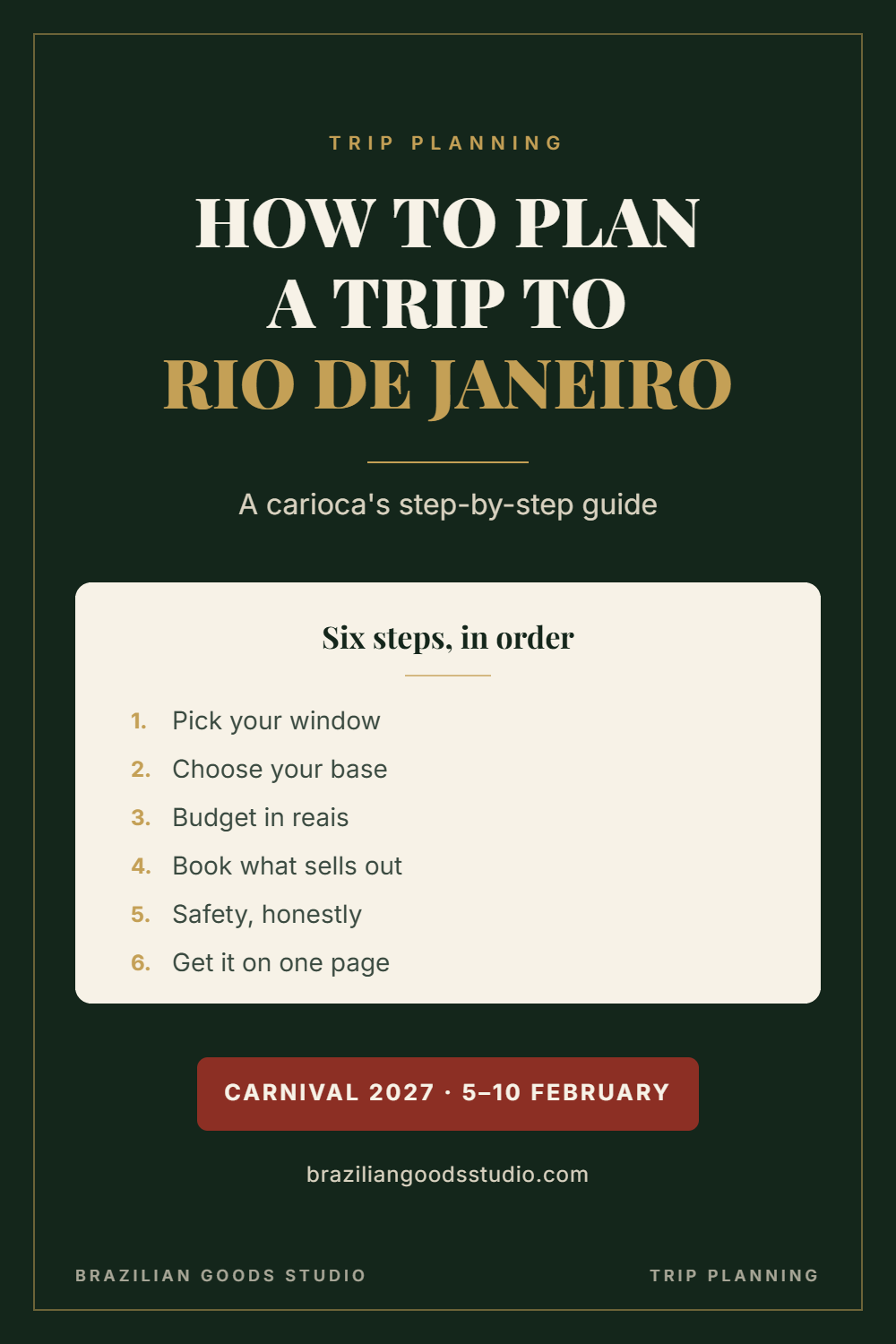
Rio Carnival 2027 runs Friday 5 to Wednesday 10 February, with the Champions’ Parade on Saturday 13 February. That is five months away, which sounds like plenty of time and is not: Sambadrome seats, Ipanema apartments and the cheap flight windows all go early, and they go in that order.
And the city is busier than it has been in years. Riotur and the state tourism secretariat counted roughly 1.3 million foreign visitors in Rio in the first half of 2026 — about 15.9% more than the same stretch of 2025, with February alone bringing 310,000. Every extra thousand people is a thousand more hands reaching for the same rooftop table.
I was born here. What follows is the order I would plan a Rio trip in, and the order matters more than any single tip.
1. Pick your window before you pick anything else
Rio has four different personalities depending on when you land, and the price of everything moves with them.
- Carnival (early February 2027). The loudest, most expensive, most unforgettable version of the city. Hotels ask for four- and five-night minimums and prices roughly double. Book by October if you want a choice.
- New Year’s Eve. Two million people in white on Copacabana beach. Same pricing problem as Carnival, compressed into three nights.
- Shoulder season — March to May, or September to November. This is the sweet spot. Warm water, thinner crowds, honest prices, and the beach still works.
- June to August. Our winter: 22–26°C, dry, blue. Fewer swimmers, better hiking, cheapest flights of the year.
If you have no fixed reason to come in February, come in April or October. You will see the same city for less money and with room to breathe.
2. Choose your base neighbourhood — this decides your whole trip
Rio is long and thin, squeezed between mountains and sea. Where you sleep determines how much of your holiday you spend in traffic.
- Copacabana — the most connected. Metro, endless food, every price bracket. Busy, a little worn, always alive.
- Ipanema and Leblon — calmer, prettier, more expensive. The best beach stretch in the city and the safest streets after dark.
- Botafogo and Flamengo — where cariocas actually live. Great bars, real restaurants, a short metro ride to the beach.
- Santa Teresa — cobbled, arty, on a hill. Wonderful for a few nights, tiring as a base, and you will rely on taxis.
- Barra da Tijuca — modern, spacious, and far. Only worth it if you have a car or a specific reason.
First trip, no car? Ipanema or Copacabana. Everything else is an optimisation you can make on the second visit.
3. Budget in reais, not in dollars
Converting every price in your head is the fastest way to overspend. Set a daily number in reais at the start and track against it.
A realistic mid-range day, per person, outside Carnival: R$150–250 for food and drink, R$40–80 for transport, and one paid attraction at R$100–200. Add accommodation on top. Lunch at a por quilo buffet — you pay by the weight of your plate — is the single best value meal in the city, and it is where the office workers eat.
The two things that quietly wreck budgets here are airport taxis and beach vendors. Agree the price before, both times.
4. Book the things that sell out; leave the rest loose
Only a handful of Rio experiences genuinely need advance booking:
- Sambadrome tickets if you are coming for Carnival — the official sale opens months ahead and the good sectors go first.
- Christ the Redeemer — timed entry by van or train, and the morning slots go first because that is when the cloud lifts.
- Sugarloaf cable car — book the sunset slot, not the midday one.
- Maracanã for a Flamengo or Fluminense match, if the fixture falls in your window.
Everything else — beaches, Lapa on a Friday, the Selarón steps, a hike up Dois Irmãos — works better decided the morning of, based on the sky. Rio punishes rigid itineraries. Plan the anchors, leave the gaps.
5. Safety, the honest version
Rio is not the war zone the internet sells, and it is not a Scandinavian capital either. It rewards the same street sense that any large city does, applied consistently:
- Carry one card and a little cash. Leave the passport in the hotel safe.
- Phone out only when you have stopped and stepped out of the flow. Not while walking.
- The beach is for a towel, sunglasses and beach money. Nothing you would mind losing.
- After dark, take a ride-hailing app instead of walking a stretch you do not know. It costs a few reais.
- Do not go into a favela without a resident-led guide, however good the view looks from the road.
Follow those five and your trip looks like everybody else’s trip: sunburn and too much cheese bread.
6. Put it all in one place
The plans that survive contact with the airport are the ones written down in a single document — flight numbers, hotel address in Portuguese for the taxi driver, day-by-day outline, budget, and the phone numbers you would want if your phone died.
That is exactly what I built the Rio de Janeiro Trip Planner for: 23 pages and 262 fillable PDF fields covering the itinerary, flights and accommodation, a budget and spending tracker, packing lists, neighbourhood notes and the safety checklist above. Type straight into it on a laptop or print it in A4 or US Letter, and there is an editable template if you want to rearrange the pages. It is $4.99.
Start with step one this week — pick the window. Everything else gets easier once the dates stop moving.